
How to Floss Your Teeth the Right Way
Your toothbrush can only reach three of the five surfaces of each tooth. Flossing handles the rest. It cleans the tight spaces between teeth and just below the gumline where cavities and gum disease like to start. Once a day is all it takes.
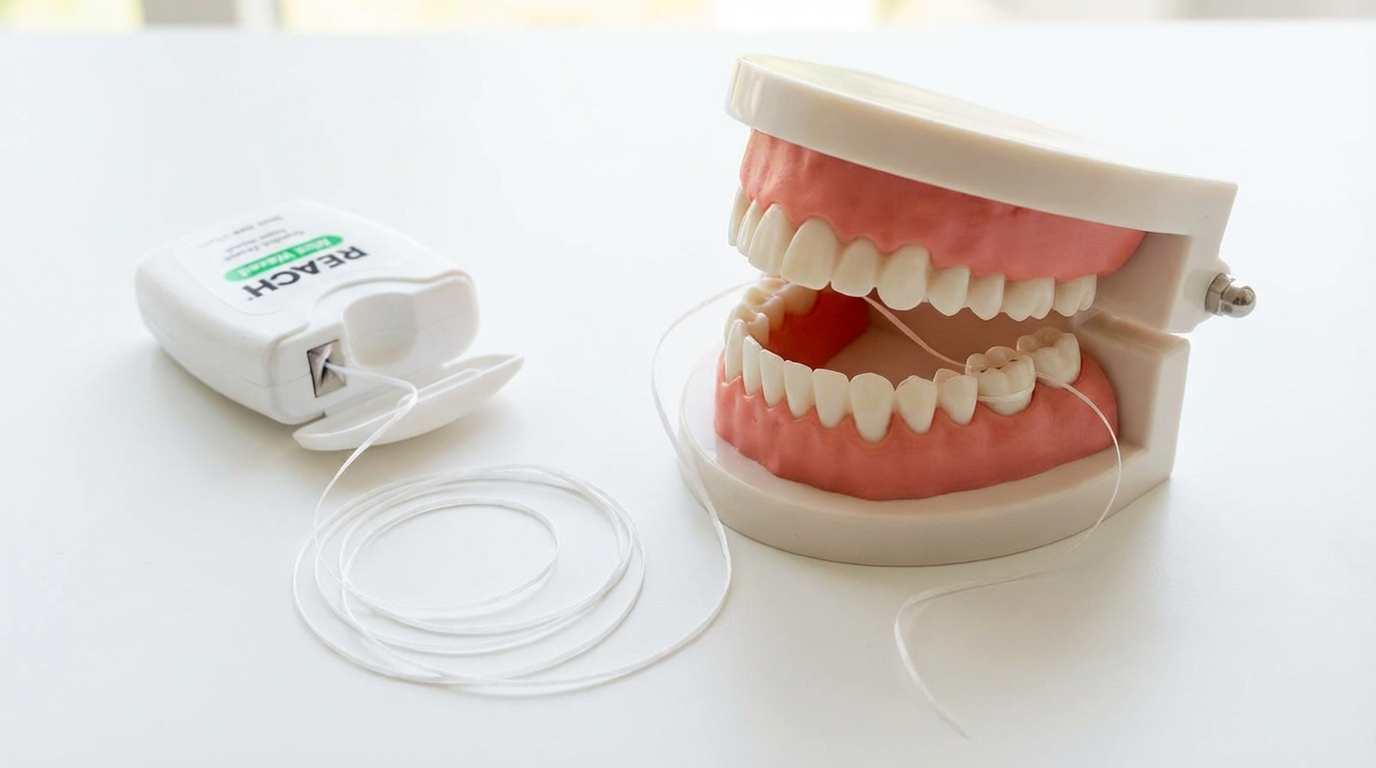
A lot of people skip flossing because it feels tedious or uncomfortable. That's usually a technique issue, not a flossing issue. Done correctly, it takes about two minutes and gets easier the more you do it. If your gums bleed when you start, that's actually a sign you need to keep going. The bleeding typically stops within one to two weeks of consistent daily flossing as the gum tissue heals.
How to Floss with Traditional Floss
Pull out about 18 inches of floss. Wind most of it around your middle fingers, leaving 1 to 2 inches to work with. Hold the floss tight between your thumbs and index fingers.
Guide the floss between your teeth using a gentle back-and-forth motion. Don't snap it into your gums. Once the floss reaches the gumline, curve it into a C-shape against one tooth and slide it into the space between the gum and tooth. Move the floss up and down against the tooth surface. Repeat on the adjacent tooth before moving to the next gap.
Use a clean section of floss for each tooth pair. Don't skip the back teeth. Decay between molars is extremely common and flossing is the primary way to prevent it.
Alternatives to Traditional Floss
If you find string floss difficult to manage, you have options.
Water flossers use a high-pressure stream of water to flush out food particles and bacteria from between teeth and below the gumline. They don't provide the same mechanical scraping action as string floss, but they clean gum pockets in a way that floss can't. They're especially useful for patients with braces, bridges, or implants.
Floss picks are easier to handle than string floss and work well for people with limited dexterity. They're not quite as effective at wrapping around the tooth in a C-shape, but they're far better than skipping flossing altogether.
Interdental brushes are small, pointed brushes that slide between teeth. They work well for larger gaps and around dental work.
The best tool is the one you'll actually use every day. If traditional floss isn't happening, switch to something that will.
When to Talk to Us
If bleeding persists beyond two weeks of consistent daily flossing, schedule a visit. It may be a sign of gingivitis or gum disease that needs professional treatment.
If you're not sure whether your technique is effective, ask your hygienist at your next cleaning. They'll show you exactly where you might be missing and help you find the right tool for your teeth.
Have Questions? We're Here to Help
Our team is ready to answer your questions and help you achieve optimal dental health.