
Root Canal Symptoms: How to Know If You Need One
How do you know if you need a root canal? The symptoms are usually hard to ignore once they show up. Here's what to watch for and why acting quickly matters.
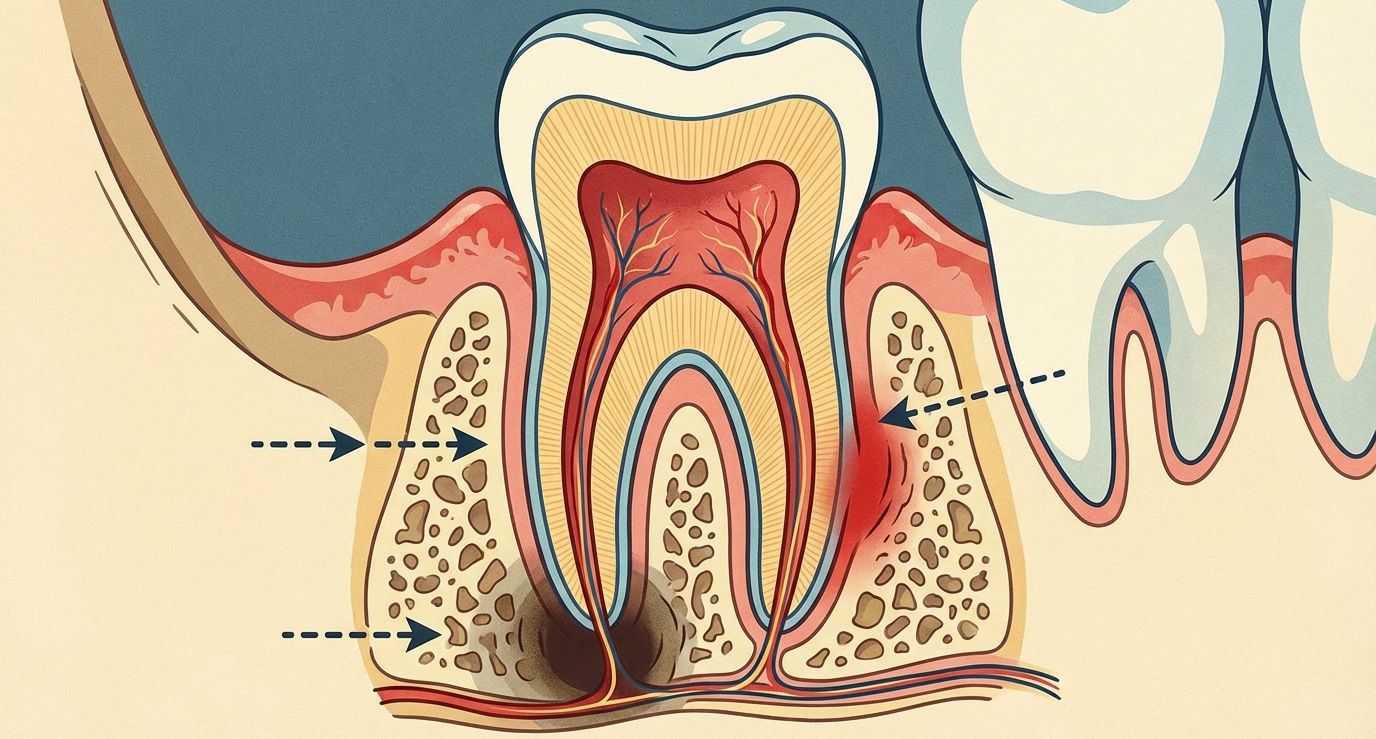
A root canal becomes necessary when the pulp inside your tooth, the soft tissue containing nerves and blood vessels, becomes infected or severely inflamed. Unlike a cavity, which affects the outer surface, a pulp infection happens inside the tooth where brushing and fillings can't reach. The only way to treat it is to go in, remove the infected tissue, and seal the tooth.
The good news is that root canal therapy today is a routine procedure. Most patients compare it to getting a filling. But catching the problem early makes a real difference in how simple the treatment is.
Symptoms That Point to a Root Canal
Persistent pain. A constant throbbing ache in a tooth, even when you're not eating or drinking, usually means the problem is inside the tooth, not on the surface. The pain may come and go at first but tends to get worse over time.
Pain when chewing or biting. Pressure on an infected tooth pushes on inflamed tissue inside. You might feel it in one specific tooth or across a broader area depending on how far the infection has spread.
Lingering sensitivity to hot and cold. Sensitivity that fades quickly after a sip of coffee or ice water is usually not a concern. Sensitivity that lingers for minutes after the food or drink is gone is a different story. That often signals nerve damage or infection inside the tooth.
Tooth discoloration. If a tooth is noticeably darker than the teeth around it, the infection may be spreading from the inside outward. The discoloration comes from the breakdown of internal tissue.
Swollen or tender gums. Swelling near the affected tooth is a sign the infection is reaching the surrounding tissue. You may also notice a small bump on the gum that looks like a pimple. That's a fistula, and it means the abscess is draining.
Don't Wait on These Symptoms
An infected tooth does not heal on its own. Without treatment, the infection can spread to the surrounding bone, form a larger abscess, and potentially cause serious health problems. The longer you wait, the more complicated the treatment becomes. A tooth that could have been saved with a straightforward root canal may end up needing extraction instead.
If you're experiencing any combination of these symptoms, call Aspire Family Dentistry. Dr. Lee will evaluate the tooth, explain what's happening, and walk you through your options before anything is done.
Have Questions? We're Here to Help
Our team is ready to answer your questions and help you achieve optimal dental health.