
How to Brush Your Teeth with Braces
Braces straighten your teeth, but they also create a lot of new places for food and plaque to collect. Keeping everything clean during treatment takes a little more effort, but it's worth it. Patients who maintain great hygiene end up with straighter teeth and healthier gums when the braces come off.
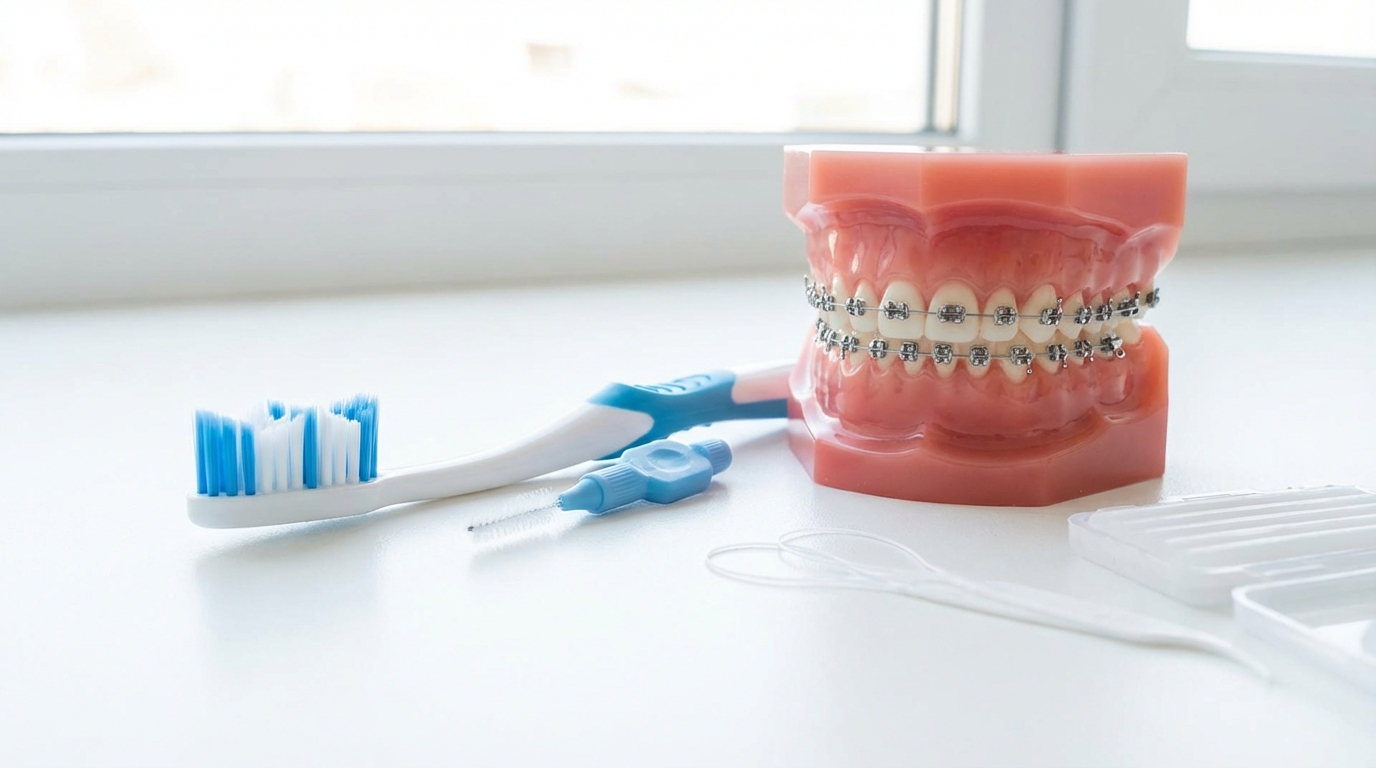
The basics of brushing don't change with braces. You're still brushing twice a day for two minutes with fluoride toothpaste. What changes is how thorough you need to be. Brackets, wires, and bands create surfaces that a normal brushing routine will miss if you're not deliberate about it.
Plaque doesn't just stick to teeth. It attaches to brackets and wires just as easily. If it builds up around the hardware, it can cause cavities, white spots on the enamel, and gum inflammation that complicates your treatment. The extra few minutes of careful cleaning each day prevents all of that.
Brushing Tips
Brush after every meal, not just morning and night. Food gets trapped around brackets fast, and the longer it sits, the more damage it does.
Use a soft-bristled brush or an electric toothbrush with an orthodontic head. Braces wear out bristles faster than normal, so plan on replacing your brush or brush head more often.
Start by brushing along the gumline at a 45-degree angle. Then brush the top of each bracket, then the bottom. Make sure you're getting above, below, and around every bracket and wire. An interdental brush, the small pointed kind, is great for getting between brackets and under wires where a regular brush can't reach.
Don't brush too aggressively. Gentle, thorough strokes are more effective and won't damage your gums or the brackets.
Flossing with Braces
Flossing is harder with braces but more important than ever. Food gets trapped in places that brushing alone can't clear.
With traditional floss, use a floss threader to guide the floss under the archwire, then floss normally between the teeth. It takes longer than without braces, but it works.
A water flosser is a great alternative. It flushes out food particles and bacteria from hard-to-reach areas quickly and effectively. It doesn't replace the mechanical scraping action of string floss entirely, but for braces patients, it's a significant upgrade in convenience and coverage.
Interdental brushes also work well for cleaning around brackets and between teeth where larger gaps exist.
For Clear Aligner Patients
If you're using Invisalign or another clear aligner system, the rules are simpler but equally important. Remove your aligners before eating or drinking anything other than water. Brush and floss before putting them back in. Trapping food or sugar between the aligner and your teeth is a fast track to cavities.
Clean your aligners daily with a soft brush and lukewarm water. Not hot, which can warp them. Avoid colored mouthwash that can stain the trays.
Have Questions? We're Here to Help
Our team is ready to answer your questions and help you achieve optimal dental health.