
How to Brush Your Teeth Properly
You've been brushing your teeth your whole life. But most people are doing at least one thing wrong. Two minutes, the right angle, and a soft touch go further than you'd think.
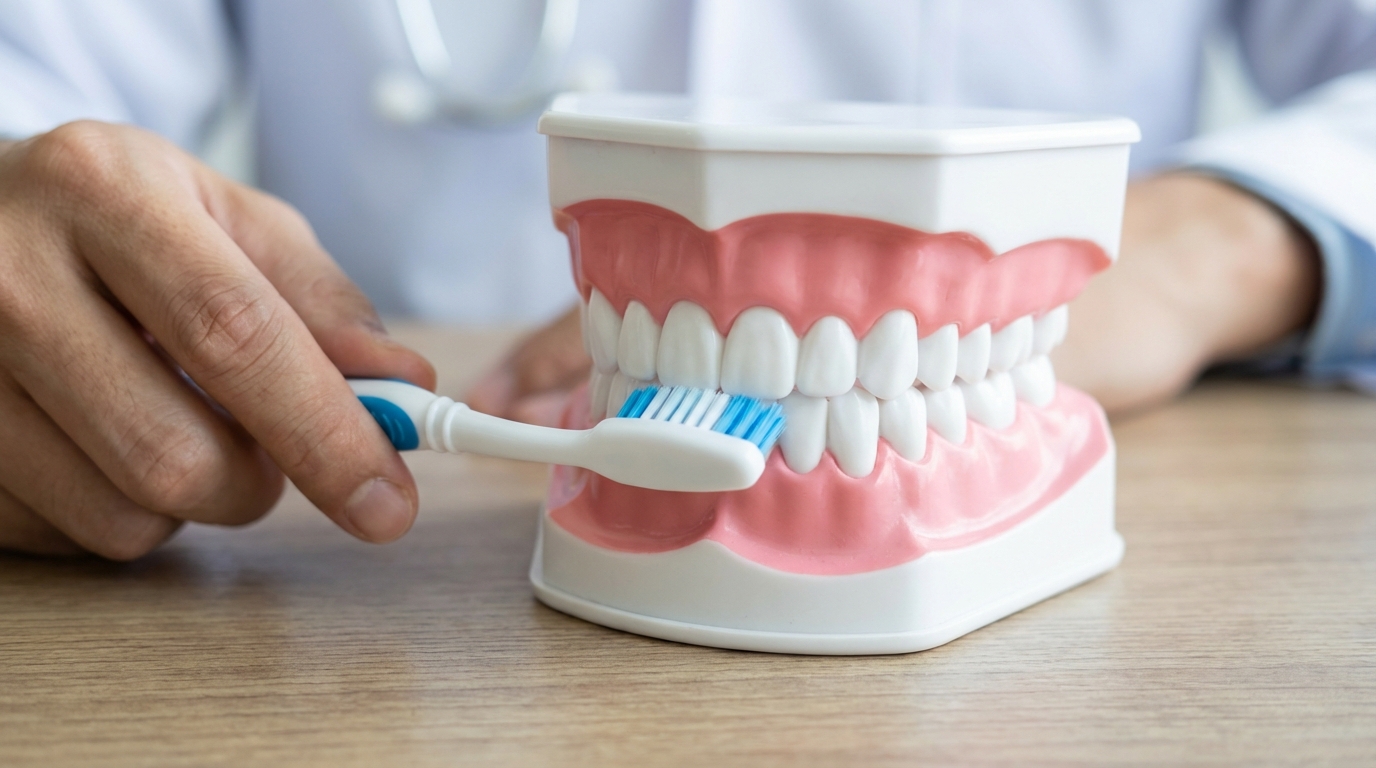
The American Dental Association recommends brushing twice a day for two full minutes each time. That's longer than most people actually brush. Try timing yourself and you'll probably be surprised. Morning and night are the minimum. After meals is even better if your schedule allows it.
Every time you eat, plaque starts forming on your teeth. Plaque is a sticky film of bacteria that produces acids and eats away at your enamel. The longer it sits, the more damage it does. Brushing removes it before it has a chance to harden into tartar, which only a professional cleaning can take off.
The Right Technique
Hold your toothbrush at a 45-degree angle to your gumline. Not flat against your teeth. Use short, gentle circular or back-and-forth strokes about a tooth wide. You don't need to scrub hard. Plaque is soft and comes off easily with the right motion. Pressing too hard actually damages your enamel and irritates your gums over time.
Brush all three surfaces of every tooth: the outer surface facing your cheeks, the inner surface facing your tongue, and the chewing surface on top. For the inside surfaces of your front teeth, tilt the brush vertically and use gentle up-and-down strokes.
Don't skip your tongue. Bacteria collect on the surface and contribute to bad breath. A gentle brush across it or a tongue scraper takes care of it.
Two minutes. That's all it takes when your technique is right.
Choosing the Right Tools
Use a soft-bristled toothbrush. Medium and hard bristles wear down enamel and irritate gums over time. If you're using an electric toothbrush with a built-in timer, even better. It takes the guesswork out of how long to brush and does some of the work for you. Just hold it at the right angle and guide it across each section of your mouth.
You only need a pea-sized amount of toothpaste. Look for the ADA Seal of Acceptance and make sure it contains fluoride. Fluoride strengthens enamel and helps prevent cavities. Beyond that, your choice depends on your needs: sensitivity formulas for sensitive teeth, tartar-control for patients prone to buildup, or whitening for surface stain removal.
Replace your toothbrush or brush head every 3 to 4 months, or sooner if the bristles are frayed. A worn brush doesn't clean properly.
If you're not sure which toothpaste or brush is best for you, ask Dr. Lee or your hygienist at your next visit.
Have Questions? We're Here to Help
Our team is ready to answer your questions and help you achieve optimal dental health.