
Dentures Cleaning & Care Guide
Dentures need daily care just like natural teeth. The right routine keeps them looking good, fitting well, and your mouth healthy. Here's how to take care of them properly.
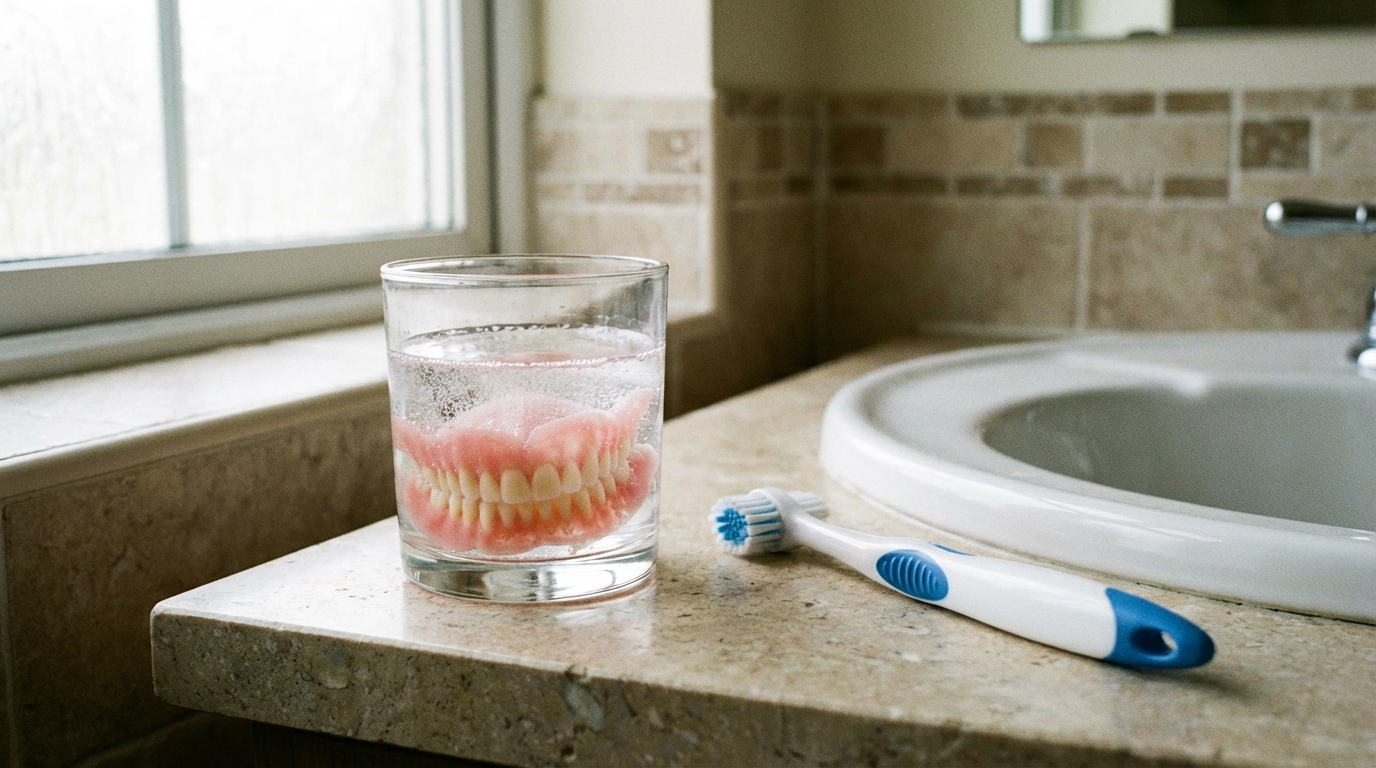
Even though dentures can't get cavities, they still collect plaque, bacteria, and stains. Neglecting them can lead to bad breath, gum irritation, and oral infections like thrush. A consistent cleaning routine takes just a few minutes a day and makes a real difference in comfort and longevity.
Daily Cleaning Routine
Remove and rinse your dentures after eating to wash away loose food particles. Once a day, brush them with a soft-bristled denture brush and mild dish soap, denture cleanser, or non-abrasive cleaner. Don't use regular toothpaste. It contains abrasives that scratch the denture surface and create places for bacteria to build up.
Before putting your dentures back in each morning, brush your gums, tongue, and any remaining natural teeth with a soft toothbrush and fluoride toothpaste. This stimulates circulation and removes plaque from the tissue your dentures rest against.
Soak your dentures overnight in water or a mild denture solution. Most dentures need to stay moist to hold their shape. If yours have metal attachments, check with Dr. Lee about which soaking solutions are safe to use.
Handling and Storage
Always handle your dentures over a folded towel or a sink filled with water. They're more fragile than they feel, and dropping them on a hard surface can crack the base or break a tooth.
Never use hot water to clean or soak your dentures. Heat can warp the material and ruin the fit. Stick to lukewarm or cool water.
When your dentures are out of your mouth, keep them in their soaking solution or in water. Letting them dry out can cause them to lose their shape and become uncomfortable.
When to See Us
Continue seeing Dr. Lee regularly even with dentures. He'll check the fit, examine your oral tissues for irritation or infection, and screen for oral cancer at every visit.
Contact us if your dentures feel loose or uncomfortable, you develop sore spots on your gums, your dentures crack, chip, or break, or a tooth on your denture comes loose.
Never try to repair or adjust dentures yourself. Over-the-counter adhesives and glue can damage the appliance and harm your tissue. Bring them in and we'll handle it properly.
Have Questions? We're Here to Help
Our team is ready to answer your questions and help you achieve optimal dental health.